
Search North Carolina Criminal Court Records
North Carolina criminal court records cover felony and misdemeanor cases heard in all 100 counties across the state. The Clerk of Superior Court in each county keeps these files on record. You can search North Carolina criminal court records online through the statewide eCourts portal from any device. The system lets you look up cases by name, case number, or citation number. Results show charges, court dates, and case outcomes. County courthouses also give in-person access to criminal court records. Self-service terminals at every clerk of court office let you search at no charge. This page explains how to find, search, and obtain criminal court records across North Carolina.
North Carolina Criminal Court Records Quick Facts
North Carolina Criminal Court Records Online
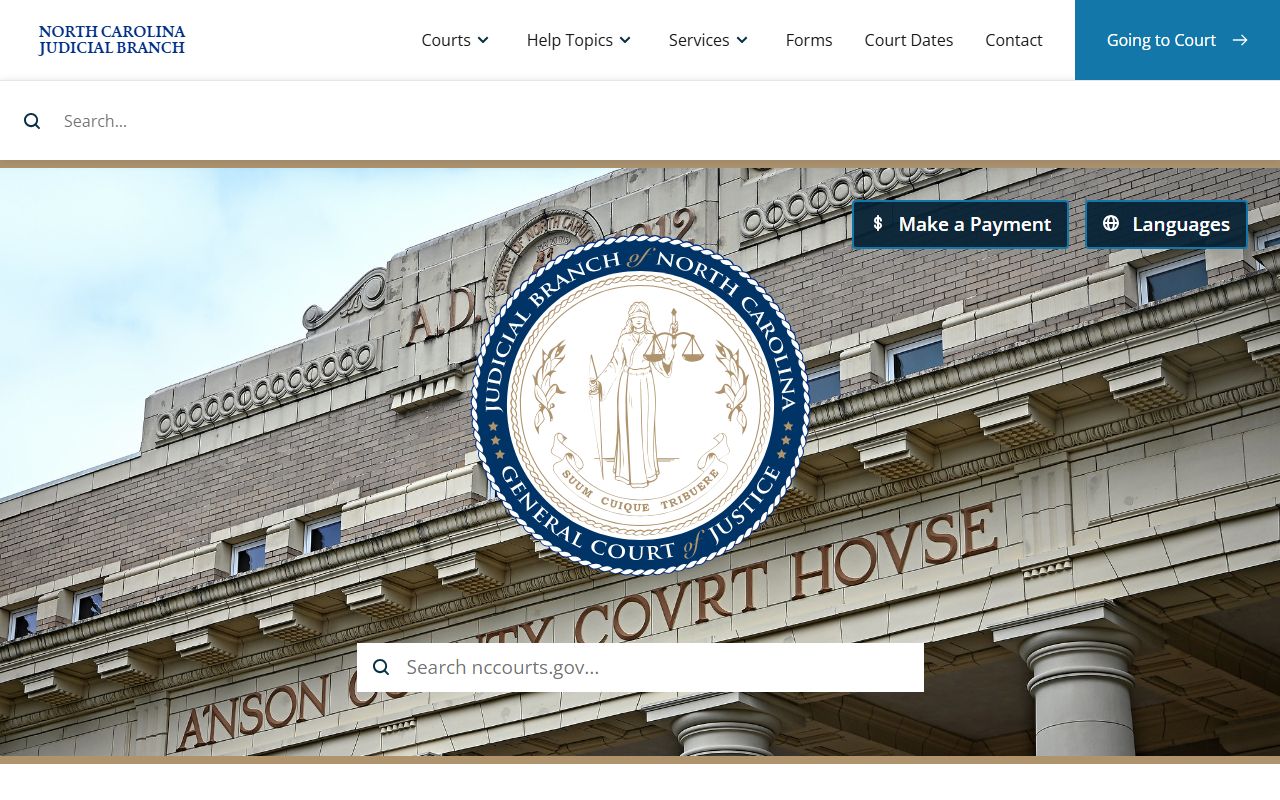
The North Carolina Judicial Branch website is the central source for criminal court records in the state. It links to all 100 county court offices. You can find contact details and local rules on the site. Basic searches are free. No sign-up is needed. The site covers criminal cases, civil matters, and special proceedings across North Carolina. Court calendars, forms, and filing guides are all posted for the public. For anyone looking for criminal court records in North Carolina, this website is the best place to start.
The state also runs a free case search tool called the NC eCourts portal. This system covers criminal court records in every North Carolina county. You can search by party name, record number, citation number, or attorney name.
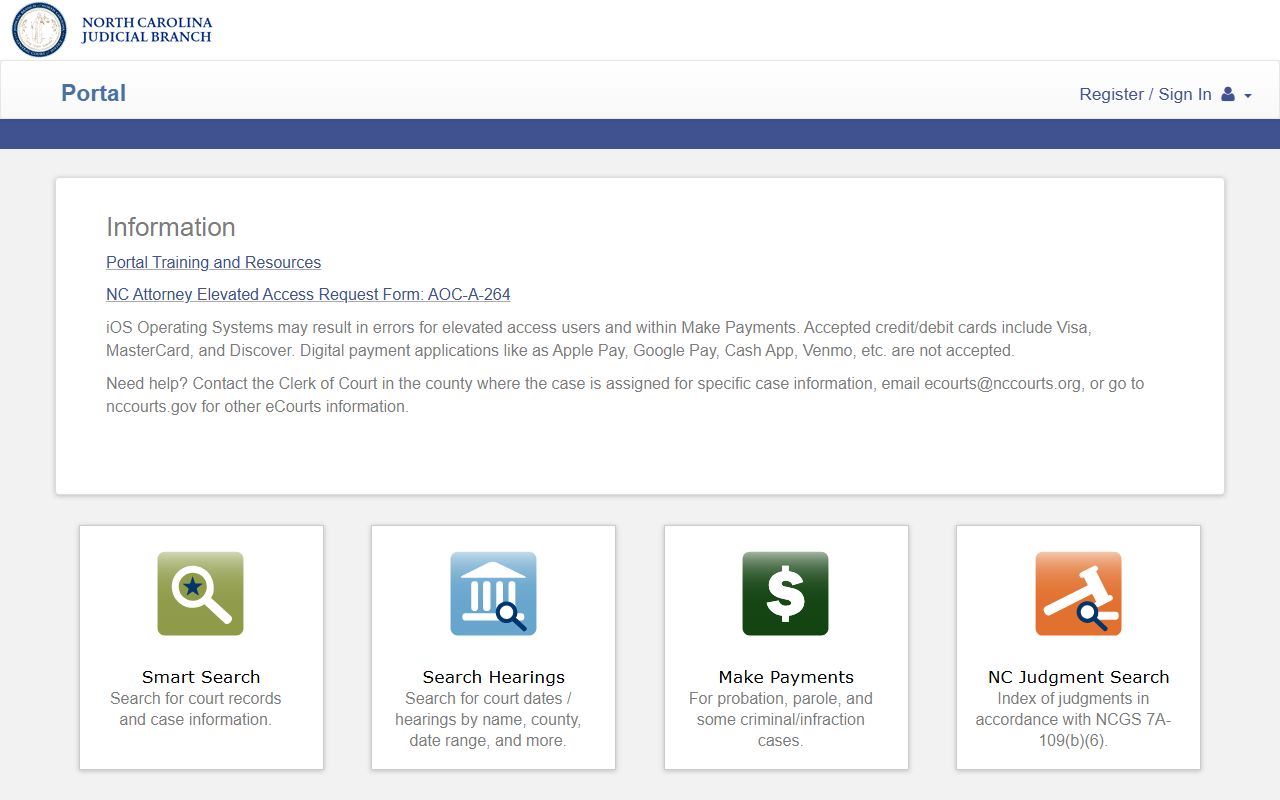
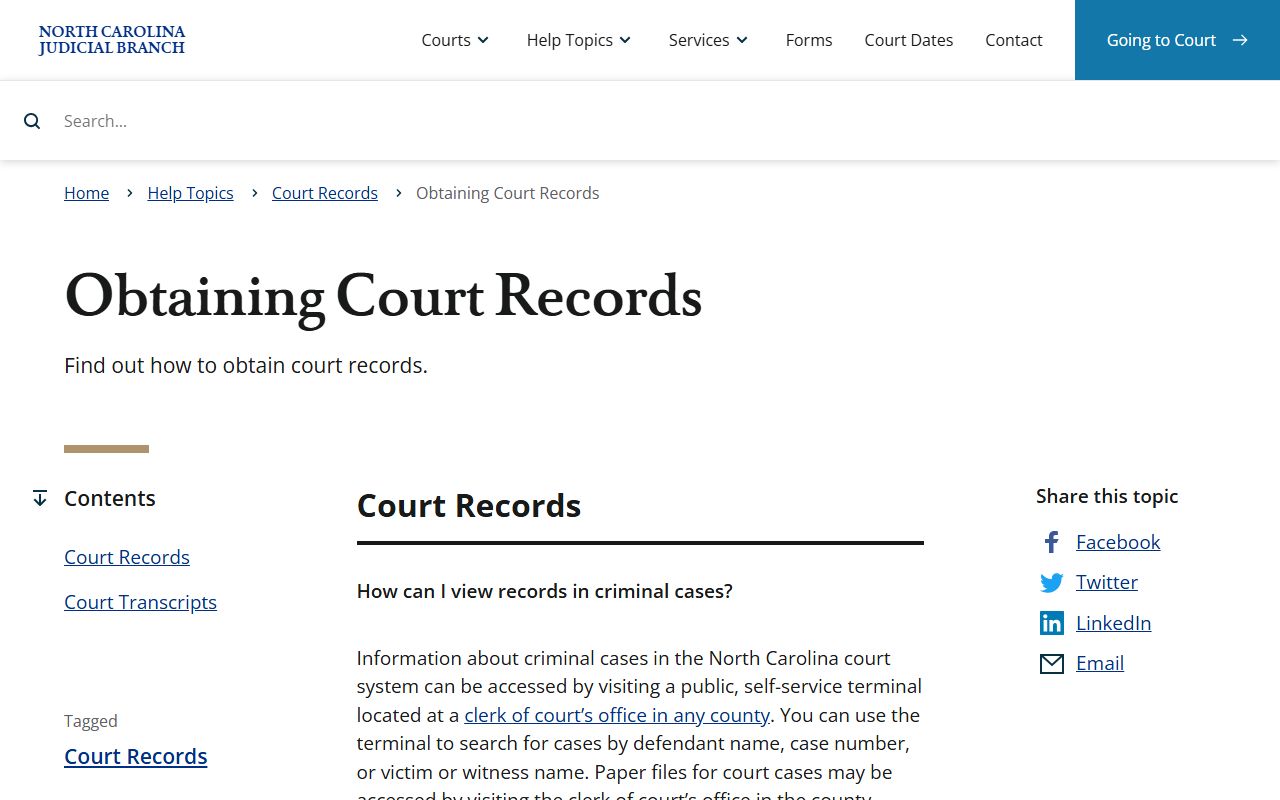
The portal shows charges, dates, and case results. You can view case documents online. Hearing times are listed for each case. Records for cases filed after October 2023 are on the portal. Older North Carolina criminal court records may need a visit to the clerk's office. Registration is not required for basic lookups. A free account lets you save cases and track them over time. The portal accepts Visa, MasterCard, and Discover for fine payments on criminal cases. Digital wallet apps are not accepted. The Obtaining Court Records page on the NC Courts website walks you through the full process for getting criminal court records.
The portal covers several types of criminal court records in North Carolina:
- Felony cases from Superior Court
- Misdemeanor cases from District Court
- Traffic infractions and violations
- Criminal case documents and court orders
- Court dates and hearing schedules
Search Criminal Court Records in Person
Every county courthouse in North Carolina has a clerk of court office where you can search criminal court records. Public self-service terminals are set up for anyone to use. You can search by name or case number. There is no charge to use these terminals. Staff at the office can help you find records and make copies. Paper files for criminal cases are kept at the courthouse in the county where the case was heard. Under G.S. 7A-109, the Clerk of Superior Court serves as the official record-keeper for all court cases in North Carolina. If you need records from a different county, you must contact that county's clerk or use the online portal.
In-person visits work best when you need certified copies or want to see a full case file. Bring a valid ID. The clerk can print pages from the file for you. Copy fees apply for all documents. Certified copies cost more than plain ones. Hours at most clerk offices are Monday through Friday, 8:30 AM to 5:00 PM. Criminal court records in North Carolina are organized by case number. This makes them easy to find once you have the right details. Call the clerk's office in advance to confirm what you need to bring.
Note: Self-service terminals do not display sealed, juvenile, or restricted criminal court records in North Carolina.
NC Criminal Background Check Process
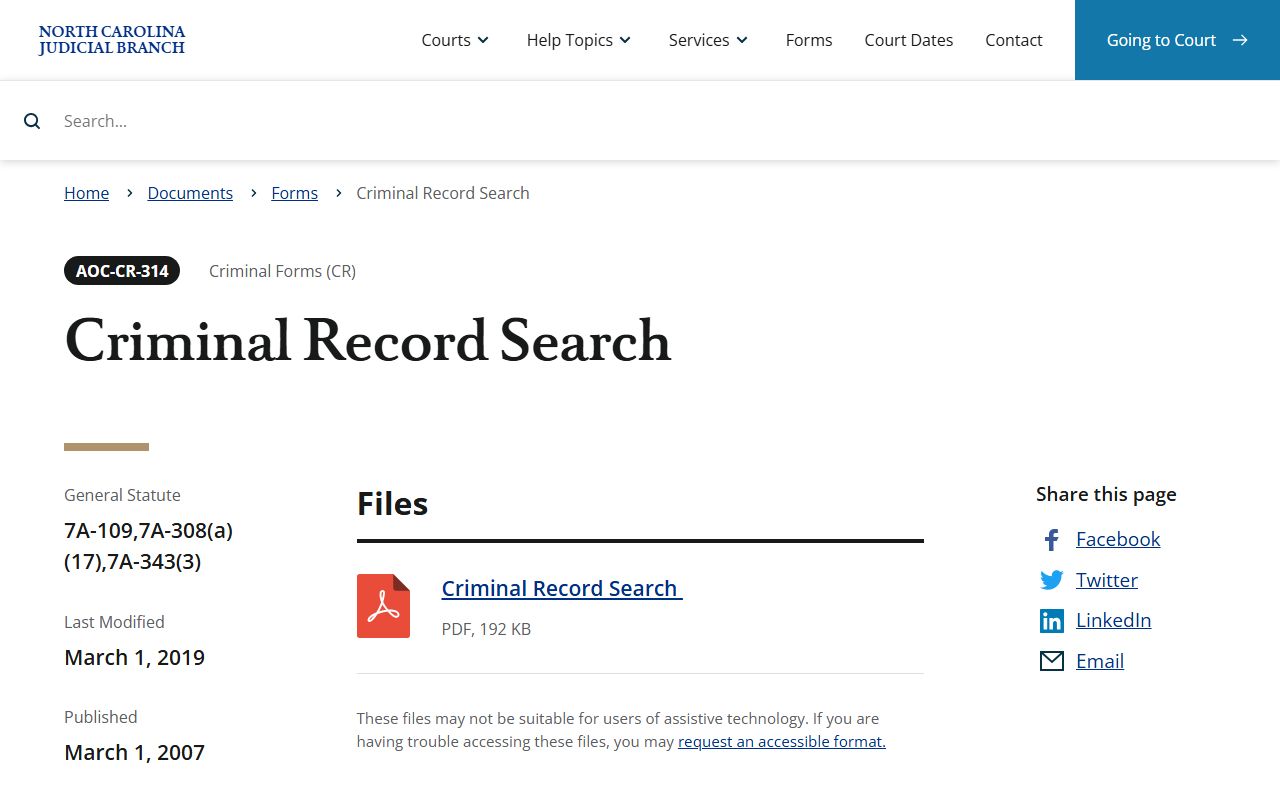
North Carolina offers several ways to check a person's criminal record. A non-certified check is available for free at any courthouse in the state. Visit the clerk of court office and use the public access computers. You can search one county or run a statewide check. This type of search is not certified. It is for personal reference only. Printing fees may apply at some locations. For a certified criminal record search, fill out Form AOC-CR-314. The NC Courts background check page explains both options in full detail.
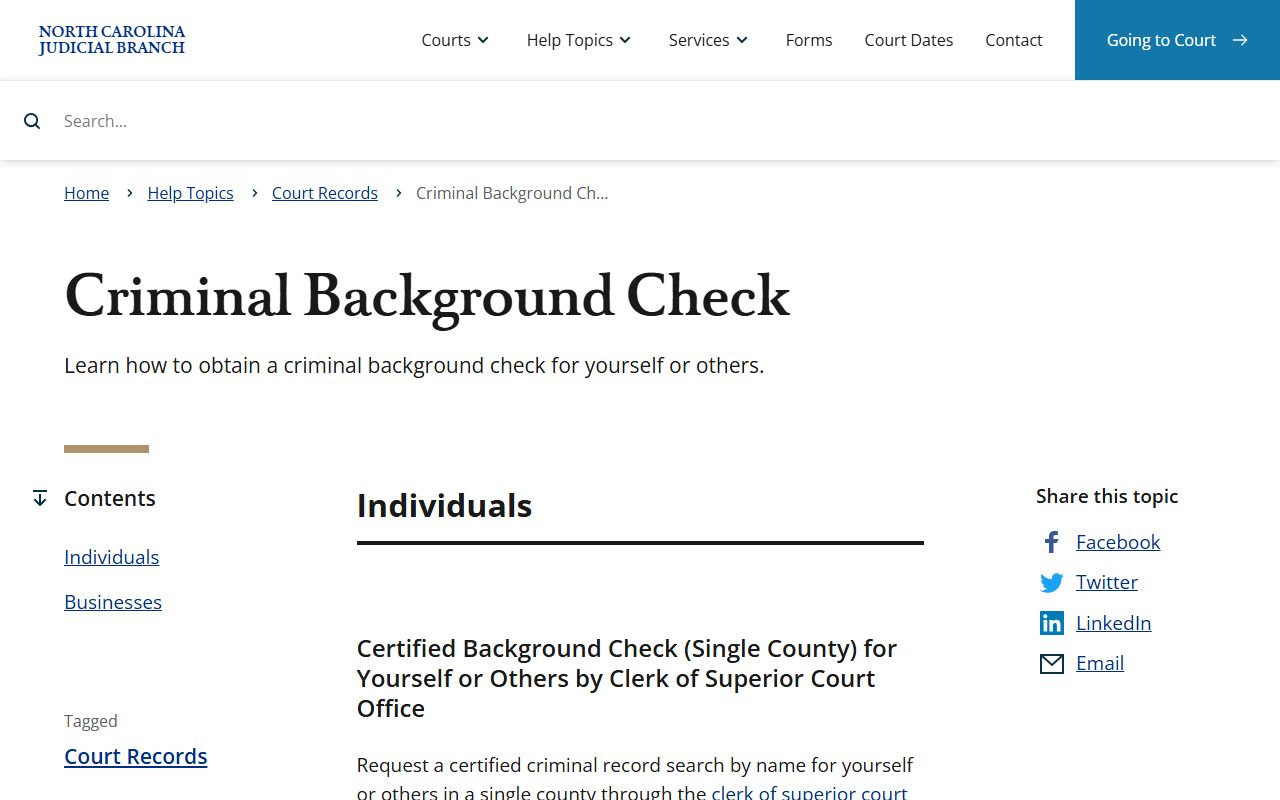
The certified search costs $25 per name under G.S. 7A-308(a)(17). Each extra copy is $15 when ordered at the same time. You can submit the form in person or by mail to any county clerk of court in North Carolina.
To get a certified criminal record search in North Carolina, you need:
- Completed Form AOC-CR-314
- Payment of $25 per name searched
- Full name of the person to search
- County or statewide search preference
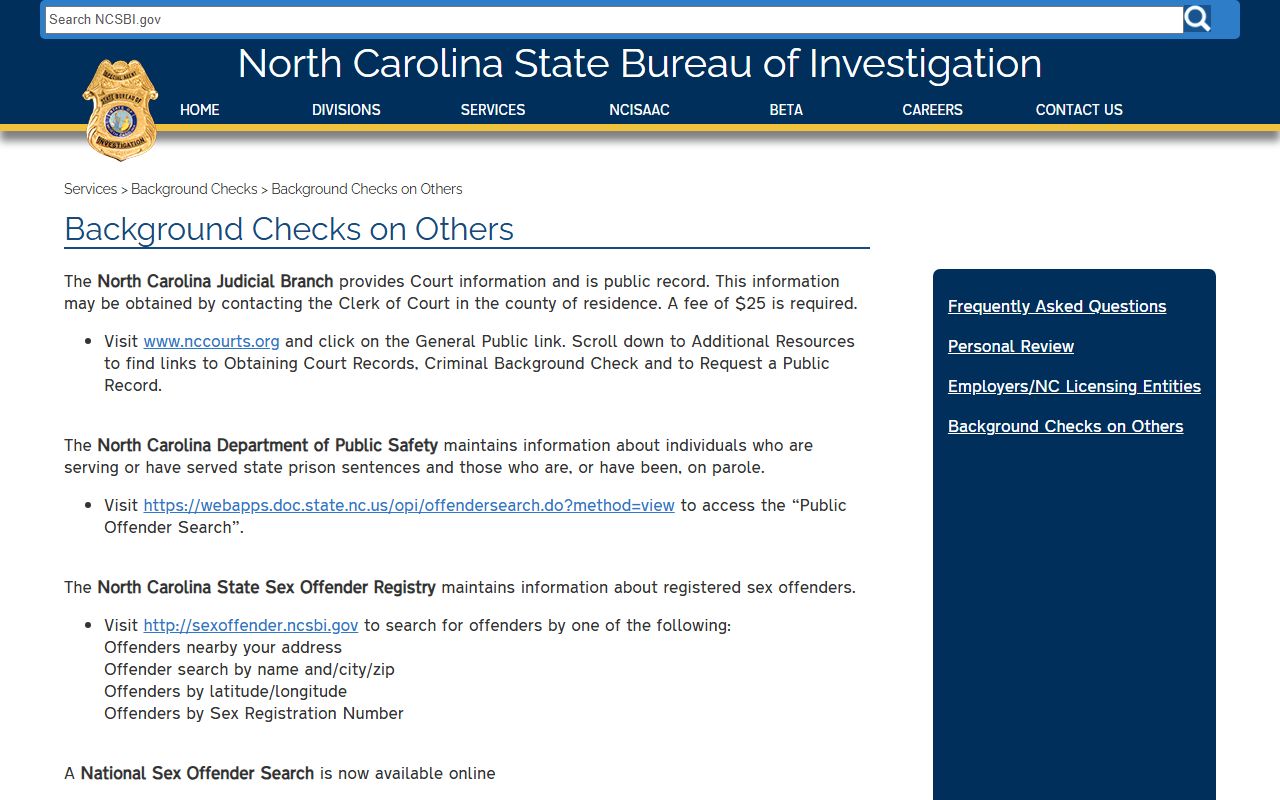
The North Carolina State Bureau of Investigation is the central repository for criminal history data in the state. The SBI offers fingerprint-based checks. These are more accurate than name-based searches. A personal review of your own criminal record costs $14 through the SBI. You can also check records on others through the SBI Background Checks on Others page. The SBI is located at 3320 Garner Road, Raleigh, NC 27626. Name-based checks from third-party vendors are not tied to the SBI and may lack accuracy. For the most thorough view of criminal court records in North Carolina, a fingerprint check through the SBI is the best option.
Private companies also sell North Carolina court data online. These vendors buy data from the state court system. Results may be outdated or incomplete compared to official criminal court records.
Criminal Court Records in Superior Court
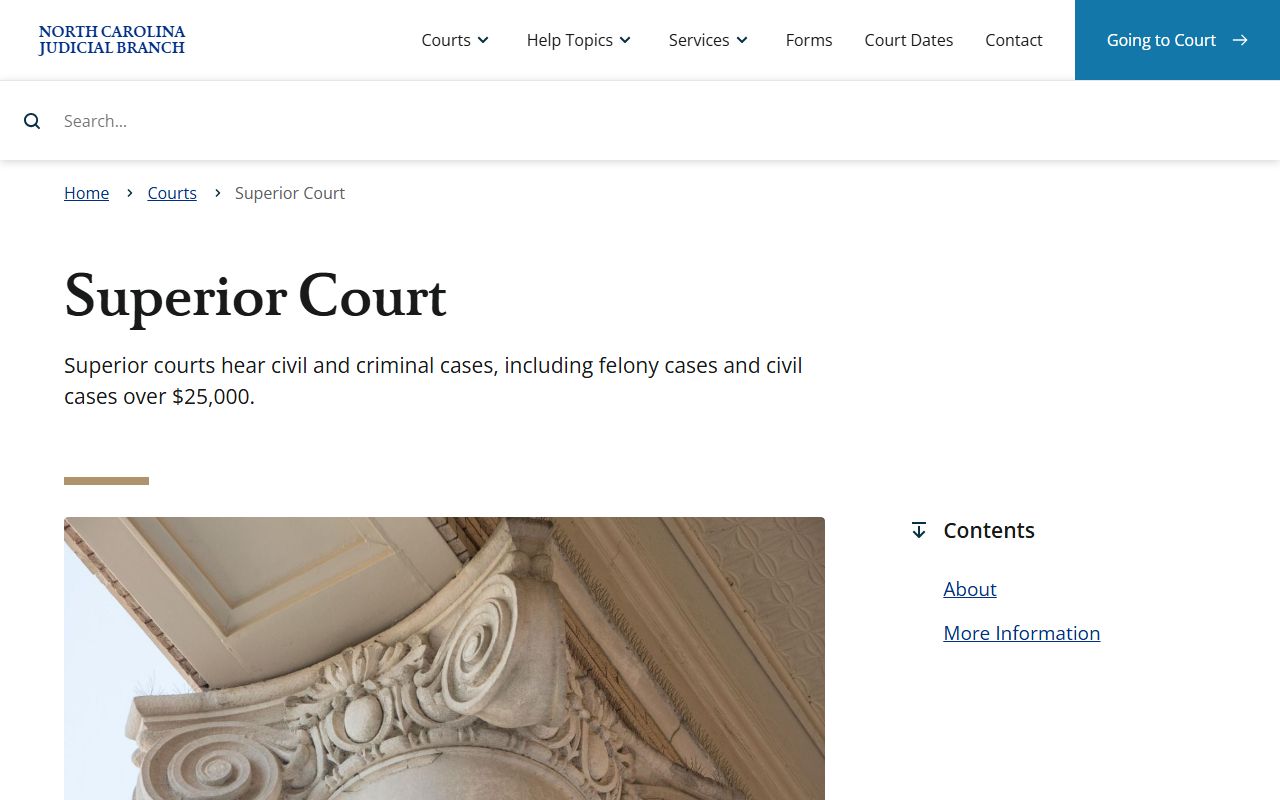
North Carolina's Superior Court handles all felony criminal cases in the state. This includes charges like murder, robbery, burglary, and drug trafficking. A 12-person jury hears cases when a defendant pleads not guilty. Superior Court also takes misdemeanor appeals from District Court. Each of the 100 counties in North Carolina has its own Superior Court division. Criminal court records from these cases include indictments, motions, trial transcripts, and sentencing orders. The records stay on file at the clerk of court office in the county where the case was tried. You can search Superior Court criminal court records online or at the courthouse.
District Court handles misdemeanors and infractions in North Carolina. These are lower-level criminal charges, traffic cases, and worthless check cases. District Court criminal records are public. They are stored at the same clerk's office. If a defendant appeals a District Court verdict, the case moves to Superior Court for a new trial. Both courts produce criminal court records that anyone can access in North Carolina. The court district number varies by county, and some districts serve more than one county.
NC Offender and Prison Records
The North Carolina Department of Adult Correction runs an offender search tool on its website. You can look up state prison inmates, probationers, and parolees by name or offender ID. The database goes back to 1972. It covers decades of criminal history in North Carolina. This tool does not include county jail records. Only people who served time in a state prison or joined the community supervision program appear in this system. The search is free and open to anyone.
Bulk data downloads are available for statistical analysis. Automated queries return counts and demographics on offenders without showing individual names.
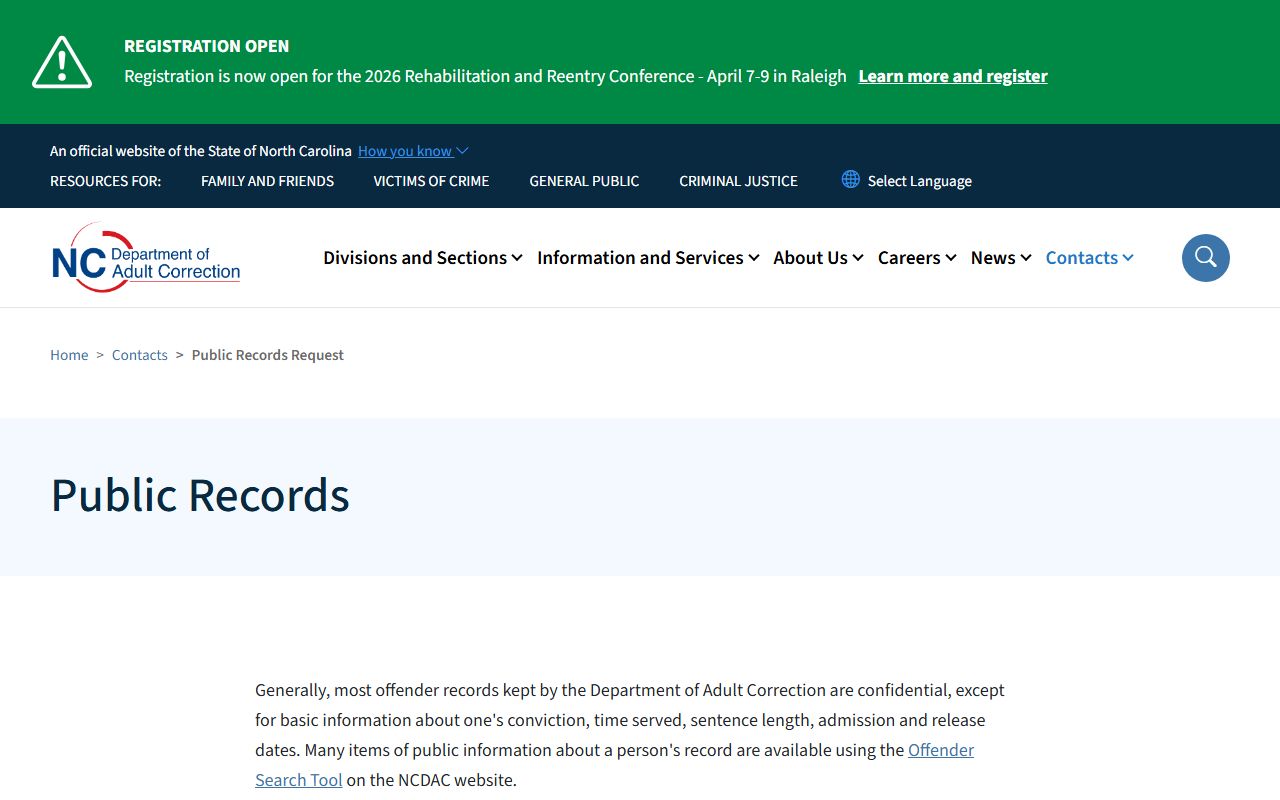
For public records requests from the Department of Adult Correction, visit the NCDAC public records page. Most offender files held by the department are confidential under state law. Basic facts like conviction details, sentence length, and release dates are public. The department does not keep records for county jails or city detention centers. For those, contact the county sheriff's office directly. Court records from criminal cases in North Carolina are held by the Clerk of Court, not the Department of Adult Correction. The NC SAVAN system provides free notifications to victims about an offender's custody status, covering state prisoners, parolees, and registered sex offenders.
Note: The NC Department of Adult Correction does not hold police reports, court records, or county jail data.
North Carolina Sex Offender Registry
The North Carolina Sex Offender Registry is maintained by the State Bureau of Investigation. It lists individuals required to register under G.S. 14-208.5 after conviction for sex offenses or certain crimes against minors. The registry is free to search. You can look up offenders by name, city, zip code, or street address. A proximity search shows registered offenders near a specific location in North Carolina. The National Sex Offender Public Website also includes North Carolina data for cross-state lookups.
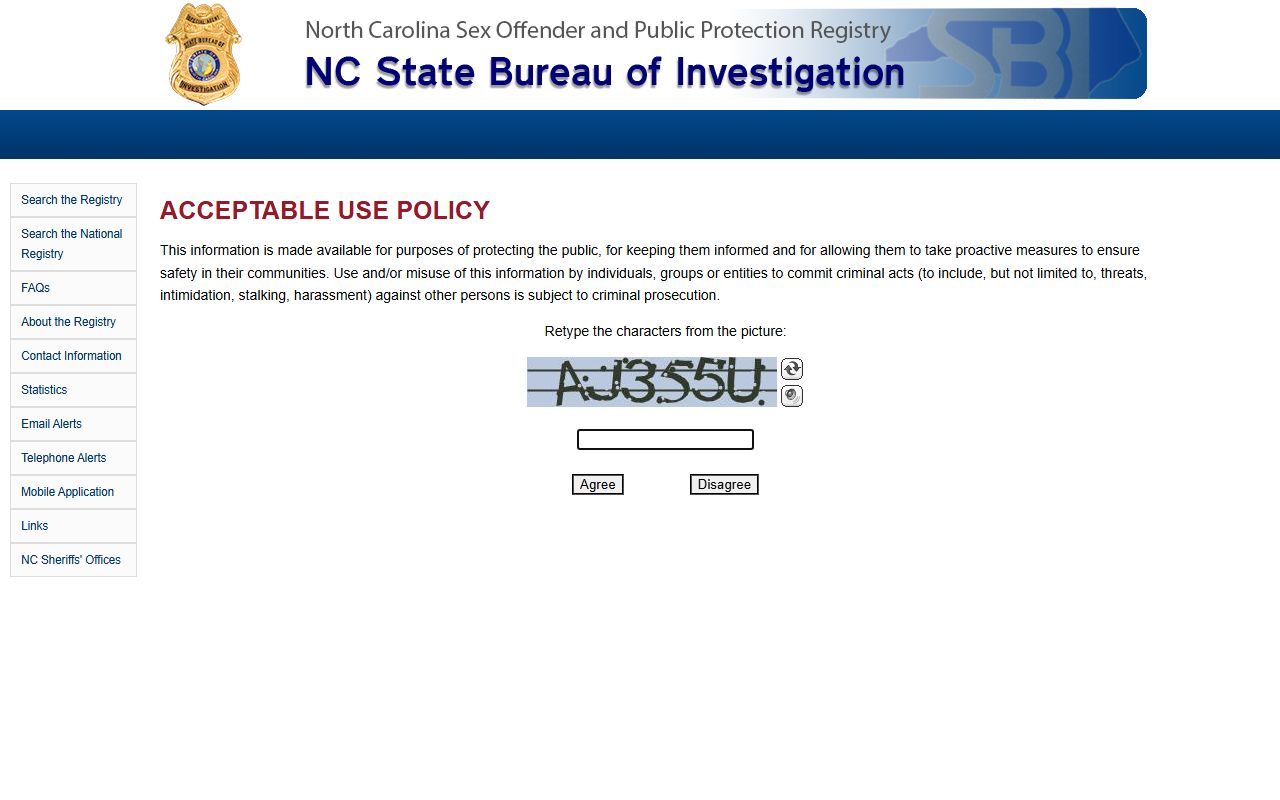
The registry shows photos, addresses, and offense details for each person listed. Email alerts notify you when a registered offender moves into your area. Victims can sign up for phone alerts through the NC SAVAN program when an offender's status changes. This system covers state prisoners, parolees, probationers, and sex offenders across North Carolina. Using registry information to threaten, stalk, or harass any person is a criminal offense under state law.
Historical Criminal Court Records in NC
The North Carolina State Archives holds historical court records from across the state. Most criminal court records from the 1800s are at the archives in Raleigh. Microfilm copies exist for many older files. Colonial court records date back to 1670. The County Court of Pleas and Quarter Sessions handled both criminal and civil cases before 1868 in North Carolina. Many original volumes have been lost or damaged over the years. Surviving records are preserved at the State Archives and open to the public. The collection includes records from the General Court, the Court of Chancery, and early county courts.
The archives is at 109 East Jones Street, Raleigh, NC 27601. Call (919) 814-6840 for help locating historical criminal court records in North Carolina.
Access NC Criminal Court Records
Criminal court records in North Carolina are public under state law. N.C.G.S. Chapter 132, the Public Records Act, gives every citizen the right to access government records. This includes criminal case files at the Clerk of Superior Court. You do not need to be part of a case to view its records. Anyone can request copies. Some records are restricted from public view. Sealed cases, juvenile files, and protective orders are not open to the public. Social Security numbers and certain financial details are redacted from copies. Under G.S. 132-6.2, state agencies are not required to create or compile records that do not already exist. You can get copies of criminal court records on file, but the court will not build custom reports for you. The NC Courts public records request form is available online for formal requests.
The Remote Public Access Program offers licensed access to criminal and civil court data in all 100 North Carolina counties. This program is built for organizations that need regular access to court records. Under G.S. 7A-343.2, fees from the program support the Court Information Technology Fund. RPA users get real-time statewide criminal data and extract files. Additional user IDs cost $70 each. All invoices are paid through the PayIt online system. For most people, the free eCourts portal provides enough access to search North Carolina criminal court records online.
For police reports, contact the law enforcement agency that filed the report. Courts do not store police reports as part of criminal court records in North Carolina.
Note: Public records requests for documents not held by the courts should go to the relevant agency, such as the sheriff's office or police department.
Browse North Carolina Criminal Court Records by County
Each county in North Carolina has its own Clerk of Superior Court that maintains criminal court records. Pick a county below to find local courthouse details and criminal records resources for that area.
Criminal Court Records in Major NC Cities
City residents in North Carolina file criminal cases at their county courthouse. Pick a city below to find criminal court records resources for that area.