
Lee County Criminal Court Records
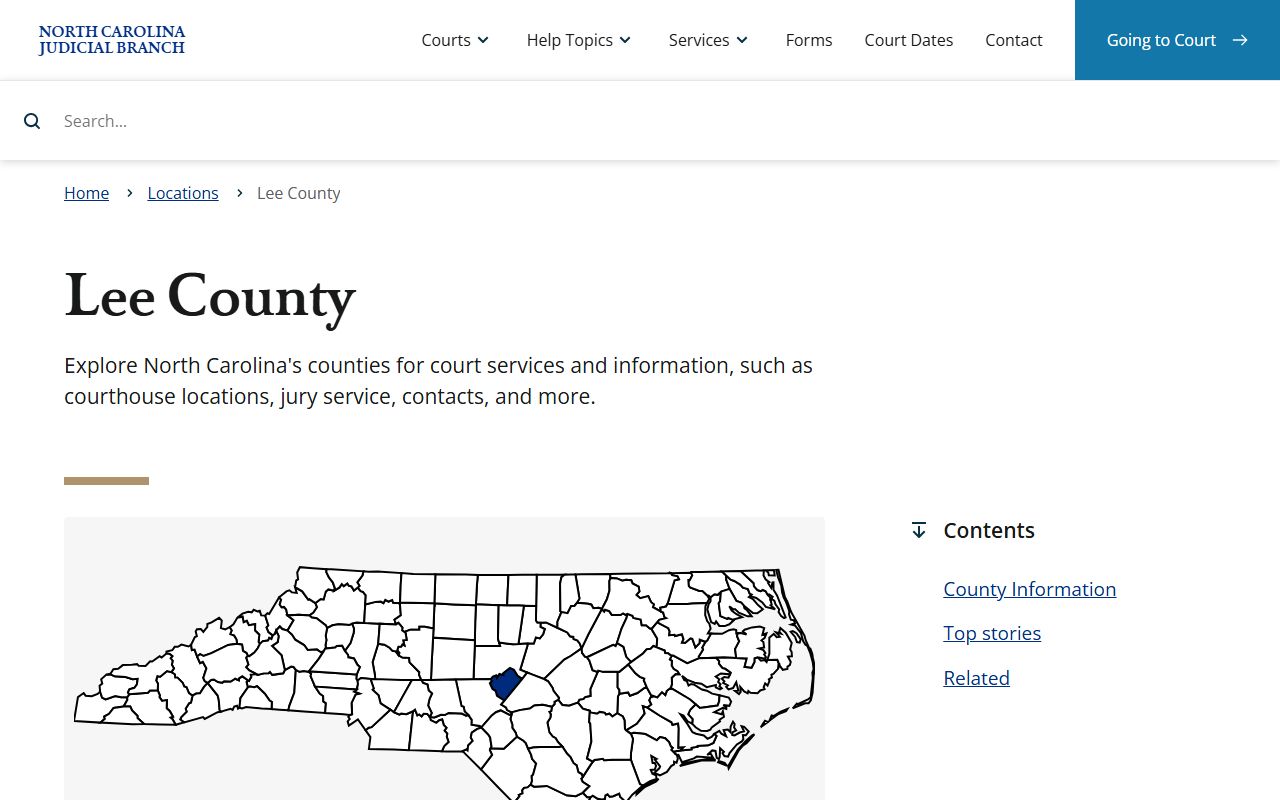
Lee County criminal court records are stored at the courthouse in Sanford, North Carolina. The Clerk of Superior Court keeps all criminal case filings for the county. Lee County is in the Sandhills region of the state, roughly midway between Raleigh and Fayetteville. You can search criminal court records in Lee County through the statewide eCourts system or by going to the clerk office in person. Public access to these records is allowed under North Carolina public records law. Both residents and non-residents can request case information.
Lee County Quick Facts
Lee County Criminal Court Records Office
The Lee County Clerk of Superior Court manages all court records at the Sanford courthouse. This includes every criminal case filed in the county. The office handles felonies, misdemeanors, traffic cases, and infractions. You can get copies of any public criminal record by asking at the front counter.
Lee County sits in Judicial District 15. The courthouse in Sanford is the only location for criminal filings. All towns in Lee County, including Sanford and Broadway, file their cases here. Visit the Lee County NC Courts page for the full contact list and driving directions to the courthouse.
Staff at the clerk office can also help you find court dates and check on case status. Criminal calendars are available on the NC Courts website.
| Court |
Lee County Clerk of Superior Court Lee County Courthouse 1408 S. Horner Boulevard Sanford, NC 27330 Phone: (919) 718-4400 |
|---|---|
| Hours | Monday through Friday, 8:30 AM to 5:00 PM |
| Website | nccourts.gov/locations/lee-county |
Search Criminal Court Records in Lee County
The state eCourts portal is the fastest way to look up criminal cases in Lee County. Go to the eCourts portal and search by name, case number, or citation number. The results show charges, court dates, and whether a case is open or resolved. This service is free. You do not need to create an account.
For a more thorough search, visit the Lee County courthouse. Public self-service terminals let you search the same database used by court staff. Paper files are stored at the clerk office and you can ask to see them. The clerk can make copies for you at the standard rate.
Mail-in requests are also accepted. Send a written request with the name and date of birth of the person you are searching. Include a self-addressed stamped envelope and any fees. The clerk will return what they find.
Lee County Criminal Court Records Fees
Fees for criminal records in Lee County follow the state schedule. A certified criminal record check costs $25. You need to complete Form AOC-CR-314 and submit it with payment. This form works for checking your own record or someone else's.
Copy fees are separate. The first page costs $2.00. Each extra page is $0.25. Certified copies of court documents cost $3.00 each. The clerk accepts cash, checks, and money orders. Some offices now take credit cards as well. Call the Lee County clerk to confirm payment options before your visit.
Note: Fees can change, so always verify current rates with the Lee County Clerk of Superior Court before you send a payment by mail.
Criminal Records and Public Access in Lee County
North Carolina public records law gives the public the right to view most criminal court records. This applies to Lee County and every other county in the state. Under N.C.G.S. Chapter 132, court records are open to anyone who asks. You do not have to give a reason for your request.
Some records are off limits. Juvenile cases are confidential under N.C.G.S. 7B-3000. Sealed and expunged records will not show up in searches. Mental health proceedings and some protective orders are also restricted. Everything else in a Lee County criminal case file is available to the public.
The NC Courts help page on obtaining records explains the full process. It covers online, in-person, and mail methods for getting criminal court records from any county including Lee County.
Criminal Case Courts in Lee County
Lee County has two court levels for criminal cases. Superior Court hears all felonies. Drug trafficking, armed robbery, burglary, and assault with a deadly weapon all go to superior court. A jury of 12 decides these cases when the defendant enters a not guilty plea. The sentencing range depends on the class of felony and the defendant's prior record level.
District Court handles misdemeanors, traffic offenses, and minor infractions in Lee County. A judge rules on these without a jury. If you are found guilty in district court, you can appeal to superior court for a new trial with a jury. Magistrates in Lee County issue warrants, set bail, and accept guilty pleas for low-level offenses at all hours.
What Lee County Criminal Records Contain
A criminal case file from Lee County tracks the full life of a case. From the first charge to the final ruling, every step is recorded. Common documents in a Lee County criminal file include warrants, charging papers, bond orders, motions, court orders, plea forms, and sentencing judgments. The record shows whether the case went to trial, ended in a plea, or was dismissed.
Dismissed cases stay in the record unless a judge grants an expunction. To have a case removed from public view, you must file a petition with the court. The process follows North Carolina state law. The clerk office in Sanford can help you find the correct forms.
State Criminal Court Records Tools
The NC Department of Adult Correction provides a free offender search. It covers people who have served time in state prison or are on probation or parole. The database goes back to 1972. It does not include county jail records for Lee County.
The NC Sex Offender Registry from the State Bureau of Investigation lets you look up registered offenders. You can search by name or location within Lee County. Alerts are available if you sign up for email updates. These tools add to the court records you can find through the clerk office in Lee County.
Nearby Counties
Lee County shares borders with several other counties. If the offense occurred outside Lee County lines, you need to search in the correct county. Criminal cases are filed where the crime took place.